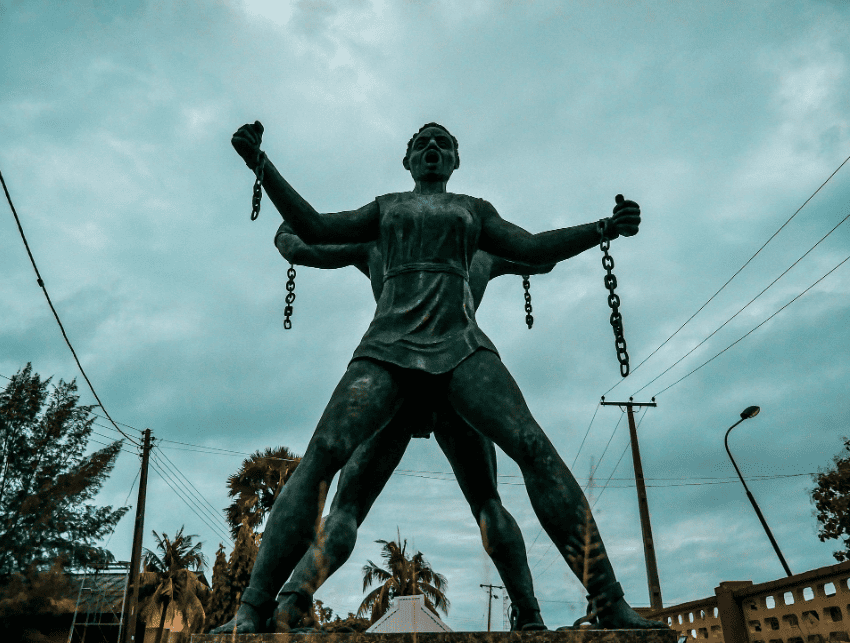

On 1 August 1834, the Slavery Abolition Act came into force and slavery ended across most of the British Empire. Communities across the Caribbean, and here in Britain, mark the day as Emancipation Day.
It is a good story, and it is usually told badly. In the version most of us absorbed at school, Parliament debated, Wilberforce prevailed, the law changed, and people who had been enslaved walked free. A tidy arc with a moral at the end, and Britain cast as the hero of a crime it had spent two centuries committing.
The reality is more uncomfortable, and considerably more interesting.
What actually happened on 1 August 1834
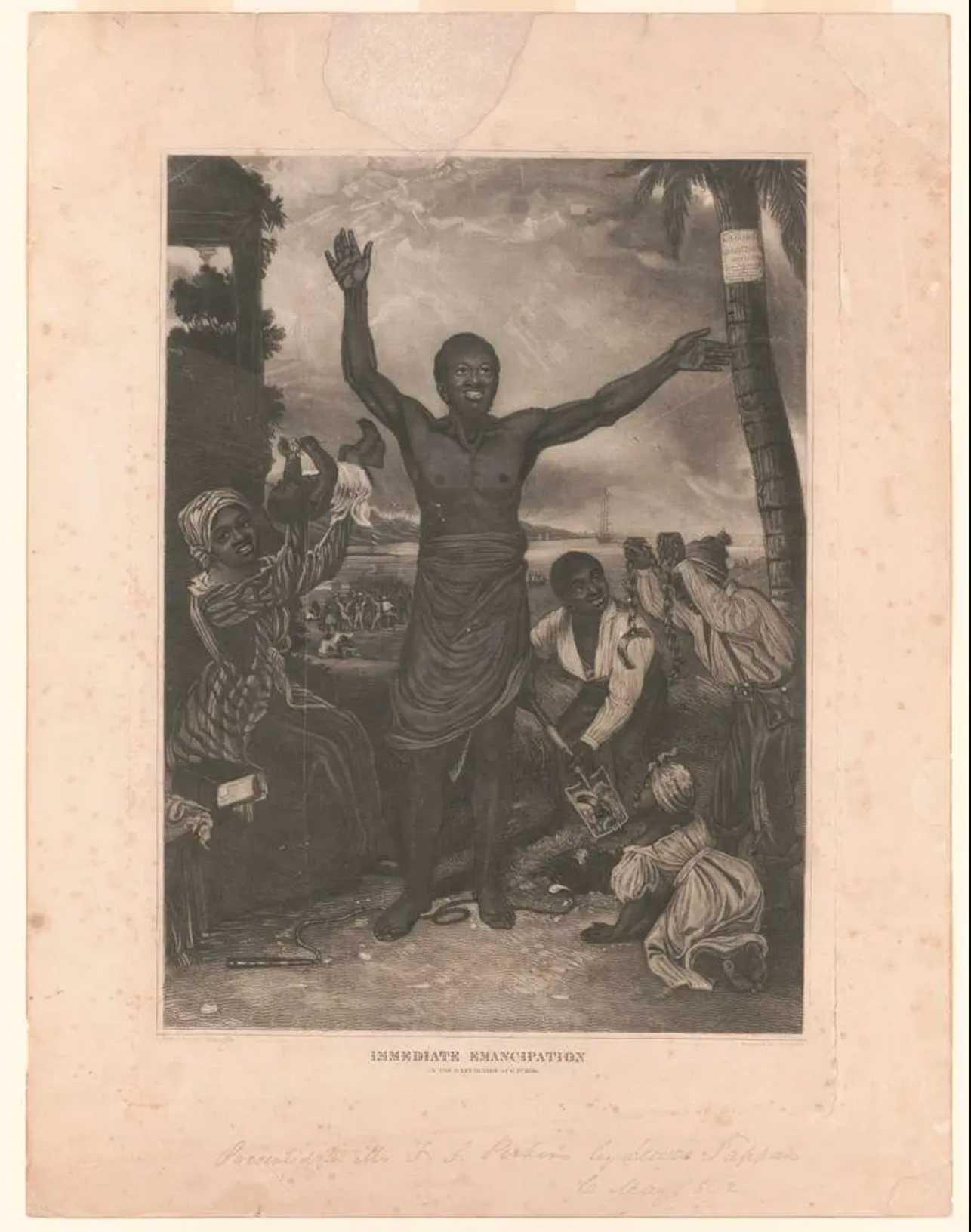
The Act freed children under six outright. Everyone else was reclassified.
The word Parliament chose was "apprentice". Formerly enslaved people were divided into categories, praedial and non-praedial, roughly field workers and everyone else, and bound to carry on working for the very people who had held them in slavery. Praedial apprentices were to serve until 1840. Non-praedial apprentices until 1838.
The terms were specific. Apprentices owed around forty-and-a-half hours of unpaid labour each week, in exchange for food, clothing and lodging. Anything beyond that could, in theory, be paid. Stipendiary magistrates were appointed to oversee the arrangement and settle disputes, and were given the power to order corporal punishment or extend a person's term of service if they judged them uncooperative. New prisons were built, fitted with treadmills, to hold those who did not comply.
Women fared particularly badly under it. Since the public flogging of women had become a point of abolitionist outrage, and planters were now barred from punishing apprentices privately, women were instead sent in large numbers to the workhouse and the treadmill under state sanction. The cruelty was not reduced. It was reassigned to a magistrate and given paperwork.
There is a useful control case in all of this. Antigua and Bermuda declined to operate the apprenticeship system at all, and granted full and immediate freedom on 1 August 1834. Immediate abolition was not a utopian proposition that the practical men of Parliament had to temper. It happened, in the same empire, on the same morning, and the sky did not fall.
The money
The Act also set aside £20 million to compensate slave owners for the loss of what the legislation called their property.
Some scale for that figure. The British government's total expenditure in 1833 was around £48.8 million, so the compensation amounted to roughly forty per cent of the state's annual spending. Estimates of its modern value vary considerably depending on the method used, ranging from a few billion pounds by simple price inflation to figures in the region of £17 billion when measured against the size of the economy. Around 46,000 claims were made, and the records of the Slave Compensation Commission now form the basis of University College London's Legacies of British Slavery database, which lists the more than forty thousand people who owned human beings at the moment of abolition. Many of them were not planters sweating on Caribbean verandas. They were clergymen, widows, merchants and MPs living quietly in British towns.
Not one penny went to any of the people who had been enslaved.
You may have seen the widely shared claim that British taxpayers were still servicing this loan until 2015. It is worth being careful here. The Treasury has confirmed that a gilt containing the original borrowing was redeemed in 2015, but it has also confirmed that it holds no record of how much of the 1833 loan remained outstanding when it was consolidated into other government debt in 1927. So the striking version of the claim, that people alive today helped pay off slave owners, cannot be substantiated in the precise form it usually takes. What is beyond dispute is the shape of the transaction itself: the nation borrowed an enormous sum, paid it to the owners, and left the owned with nothing.
Who actually ended it
The apprenticeship system was meant to run until 1840. It collapsed in 1838. That did not happen because Parliament reconsidered.
It happened because the people subject to it refused to accept it. Across the Caribbean, apprentices struck, downed tools and simply declined to work under a regime they correctly identified as slavery with a new name. They had performed the same labour under the same overseers on the same estates, and saw no reason to serve a transitional apprenticeship in skills they already possessed. In St Vincent, mothers won a quiet and decisive victory by refusing en masse to let their children be apprenticed to the estates at all.
It happened, too, because of what came before. At Christmas 1831, up to sixty thousand of Jamaica's three hundred thousand enslaved people rose in the rebellion known as the Baptist War, organised by the Baptist deacon Samuel Sharpe, who had intended a peaceful general strike for wages. The rising was suppressed. Sharpe was hanged in Montego Bay in May 1832, in the square that now bears his name. Something over three hundred people were executed. When missionaries testified in London about the ferocity of the planters' reprisals, the political ground in Westminster shifted. Historians widely credit the rebellion, and the response to it, with accelerating the passage of the 1833 Act.
And it happened because a young man made sure Britain could not claim ignorance. James Williams, an apprenticed labourer in Jamaica, was brought to Britain in 1837 at the instigation of the Quaker abolitionist Joseph Sturge. The narrative he dictated, an account of his own treatment since 1 August 1834, was published that year and became one of the most effective documents of the anti-apprenticeship campaign. A Commission of Inquiry followed. Sturge, who had travelled the Caribbean gathering evidence and then testified before the Commons, published his own findings the same year.
On 1 August 1838, apprenticeship ended for everyone, two years early.
Emancipation Day belongs to Sharpe and to Williams, to the women of St Vincent, and to the hundreds of thousands of people who made an unworkable system unworkable. It was not conferred. It was extracted.
The argument from Leicester
There is a Leicester thread running through this, and it is not a decorative one.
In 1824, a decade before the Act, Elizabeth Heyrick published Immediate, not Gradual Abolition. Her central claim was not that gradualism was too slow. It was that gradualism was a category error, a way of postponing justice while calling it prudence. Slavery would not fade of its own accord, she wrote, because no institution built on profit ever has. It had to be crushed at once or not at all. And she made a prediction that reads now like a description of the apprenticeship system: a gradual emancipation, she argued, would beget a gradual indifference to emancipation itself.
She also refused the comfortable division of responsibility. The perpetuation of slavery, she insisted, was not an abstract matter to be settled between government and planters. It implicated everyone who bought what the plantations produced. All of us, she wrote, were guilty. She then acted on it, walking Leicester's grocers' shops in person to press them to stop stocking West Indian sugar. By 1825, roughly a quarter of the city had given it up.
This was not a popular position. The Anti-Slavery Society's leadership was gradualist by policy and by name, and tried to suppress the pamphlet. Wilberforce instructed the movement's leading figures not to speak at women's anti-slavery societies.
The women's societies won anyway, and they won with money. By 1830 they supplied over a fifth of the national society's donations, and the Female Society for Birmingham was among its largest single donors. In April that year the Society made its money conditional. Its minutes record a resolution to give the national body £50 if it would drop its commitment to gradualism. The tactic is credited to Elizabeth Heyrick.
Accounts differ on where the emphasis lay, whether the £50 was held out as an inducement or its absence understood as a threat. The minutes read as an offer. It is worth noting that the distinction may have felt academic to the men receiving it, since either way the position was the same: the funds existed, the women controlled them, and a condition was now attached.
Elizabeth Heyrick did not see any of it. She died on 18 October 1831, two months before the Baptist War, three years before the Act took effect, and seven before freedom was real.
Why this matters now
It would be easy to make this a story about a woman who was right, and to leave it there. It is more useful as a story about how a certain kind of argument gets defeated.
The gradualists in 1833 were not villains in their own minds. They were reasonable people managing a difficult transition, mindful of property rights and economic stability, wary of moving faster than institutions could bear. They produced a law that kept three-quarters of a million people in unpaid labour for another four years, compensated the wrongdoers handsomely, and gave the wronged nothing at all. Elizabeth Heyrick had named the mechanism nine years earlier. Delay dressed as prudence is still delay, and somebody spends their life paying for it.
The Elizabeth Heyrick Society campaigns for a memorial for her in Leicester. She was born in this city, she made history in this city, and she was buried in this city. And yet, almost nobody knows her name. Part of the reason for that is straightforward. she was a woman, she was not in Parliament, and history has generally preferred to remember the men who eventually agreed with her.
But part of it is that she is awkward to commemorate. Elizabeth Heyrick is not a comfortable figure for a national story that likes to remember abolition as something Britain generously did. She thought her own country's caution was complicity, and said so, and was proved right within a decade of her death.
Emancipation Day is not widely marked in Leicester. Given what this city contributed to the argument, and given that the argument turned out to be correct, we think it should be.
Sources and further reading
- Elizabeth Heyrick, Immediate, not Gradual Abolition; or, An Inquiry into the Shortest, Safest, and Most Effectual Means of Getting Rid of West Indian Slavery (London, 1824)
- James Williams, A Narrative of Events since the First of August 1834, by James Williams, an Apprenticed Labourer in Jamaica (London, 1837)
- Joseph Sturge and Thomas Harvey, The West Indies in 1837 (London, 1838)
- Legacies of British Slavery database, University College London: lbs.ucl.ac.uk
- Jocelyn Robson, Elizabeth Heyrick: The Making of an Anti-Slavery Campaigner (Pen & Sword History, 2024)
- Clare Midgley, Women Against Slavery: The British Campaigns, 1780 to 1870 (Routledge, 1992)
- Nicholas Draper, The Price of Emancipation: Slave-Ownership, Compensation and British Society at the End of Slavery
- The Slavery Abolition Act 1833, full text via The Statutes Project
%20-%20(MeisterDrucke-177377).jpg)