%20-%20(MeisterDrucke-177377).jpg)

Elizabeth Heyrick (1761-1831) is perhaps best known for her campaigns against the slave trade and her tour de force pamphlet, Immediate, Not Gradual Abolition (1824), but her commitment to animal rights was equally revolutionary.
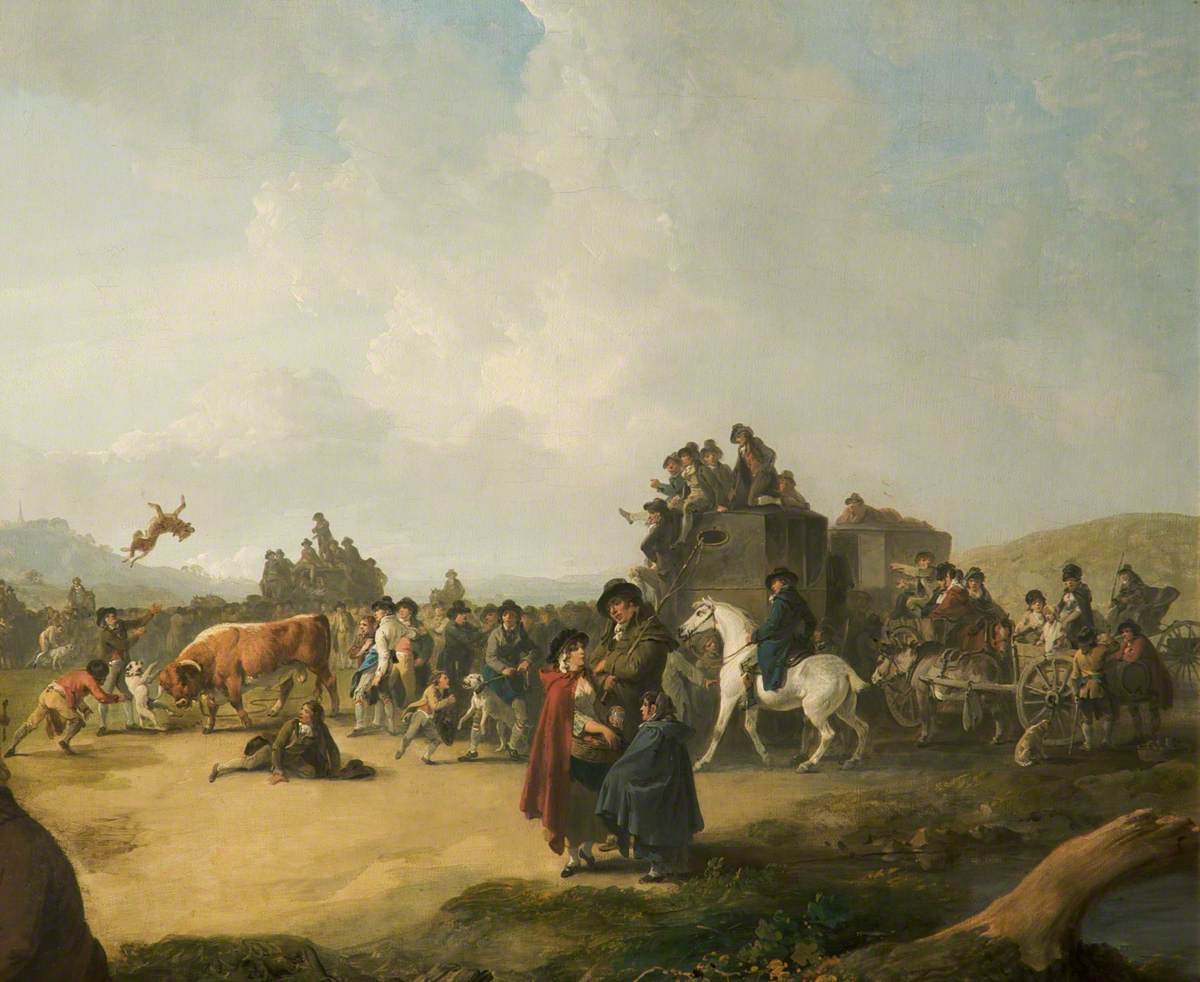
For centuries, cruelty to animals was widespread and socially accepted in Britain. Blood sports such as bull-baiting and cockfighting were common forms of entertainment, animals were routinely overworked in agriculture and transport, and little legal protection existed for their welfare. However, a growing sentiment to end blood sports began in the late 18th century, and by the early 19th century, these practices were increasingly challenged and in decline across much of Britain. Bull-baiting nevertheless persisted in some areas, as in Derbyshire, until the passing of the Cruelty to Animals Act in 1835, which formally criminalised all blood sports (Malcolmson 124).
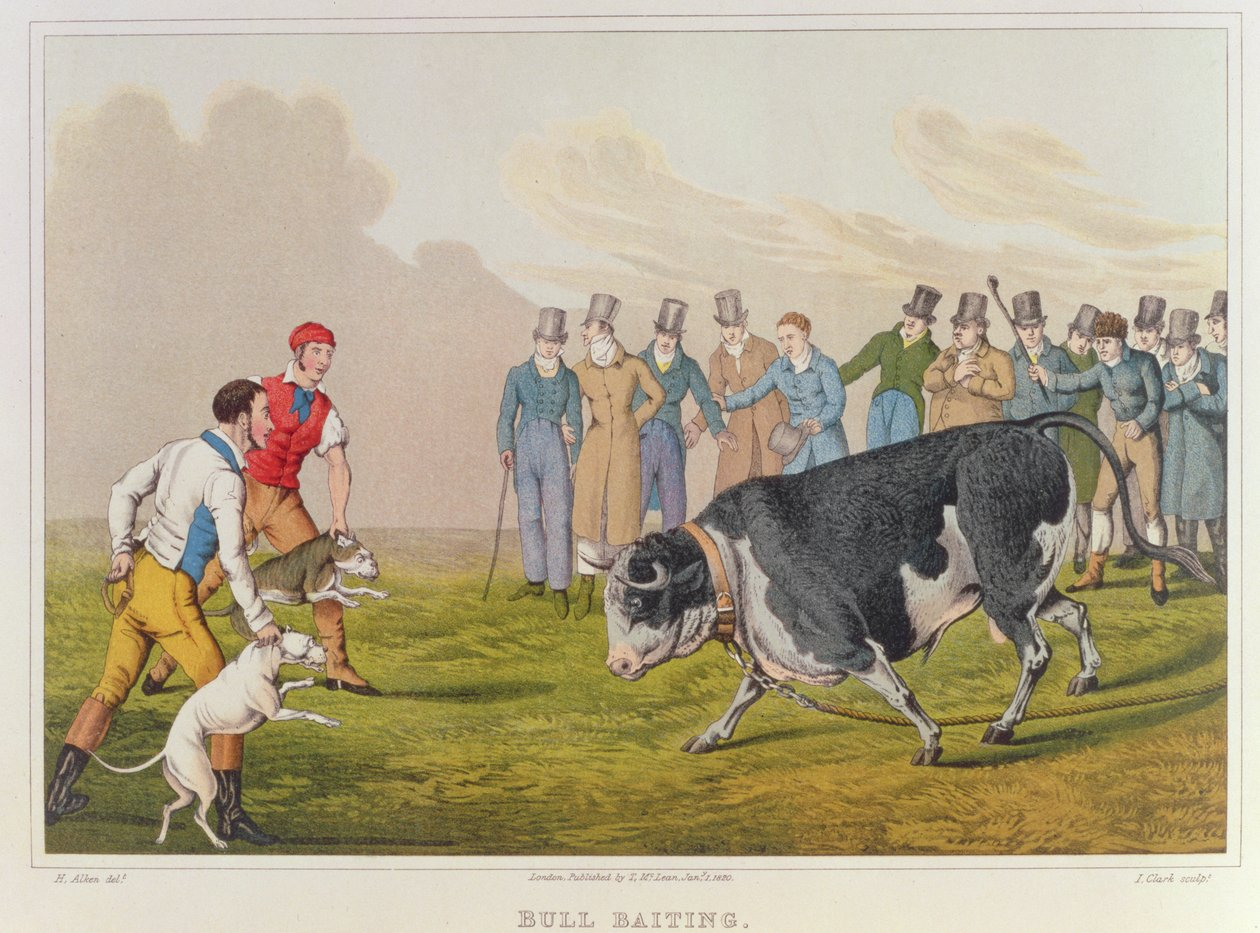
One of the most vocal opponents of bull-baiting was Elizabeth Heyrick, who began a personal campaign to expose its brutality in 1809. That year, she produced two pamphlets: Bull-baiting: a village dialogue, between Tom Brown and John Sims (1809) and A Christmas Box: for the advocates of Bull-Baiting (1809). 1809 also marked her first act of direct protest. When the annual bull-baiting spectacle was scheduled at Bonsall village in Derbyshire, Heyrick attempted to stop it. She spoke with several officials, including the magistrate, who expressed support but felt the event was too soon to intervene. Undeterred, Heyrick sought out the bull's owner, purchased the bull in secret, and then hid the animal in the cottage of her hosts until public anger subsided (Beal 199-200).
In 1811, she returned to Bonsall to stop the spectacle again; armed with her pamphlets, she canvassed door to door, urging the community to take action. Many agreed with her stance, including Rev. Henry Maddock, the curate of Bonsall, who also denounced the practice and defended Heyrick’s protest. Maddock tried to dissuade parishioners from proceeding with the spectacle; he condemned the sport in sermons delivered on the Sunday before and again on the morning of the event. He returned to the town to find preparations for the event still underway; Maddock then intervened, freeing the bull and leading it to safety (Beal 201).

Protests against blood sports continued in Derbyshire into the 1830s. In 1834, Henry Sim, a clergyman, also tried to stop the annual bull-baiting exhibition in Bonsall. When persuasion failed, he bought the bull for one guinea and removed the bull-ring, causing havoc in the village. Sim is believed to have brought the bull-ring into St James Church in Bonsall, where it can be found today. (March et al. 10).
Heyrick was a supporter of Richard Martin (1754-1834), an Irish politician and a campaigner for the Cruel Treatment of Cattle Act of 1822, the first known animal welfare law in Britain. However, Heyrick was dissatisfied with the law and its apparent lack of action, and in 1823, she issued another pamphlet, entitled Cursory Remarks on the Evil Tendency of Unrestrained Cruelty. The pamphlet illustrated the ongoing abuse of cattle at Smithfield Market in London, despite the recent legal reform. Heyrick appealed directly to the public, exposing the inadequacy of the law and argued that more intervention was needed.
Major animal protection laws in Britain did not appear until after Elizabeth Heyrick’s death in 1831, but the moral arguments that shaped them were already emerging in her lifetime. Through her pamphlets, public protests, and willingness to confront local authorities, Heyrick challenged her contemporaries to reconsider everyday practices that were long accepted. Her work laid the foundations for later animal protection movements that would begin in the decades after her death, and her example encourages us to reflect on our own responsibility to stand against cruelty in all forms.
References
Beal, Catherine Hutton. Catherine Hutton and her Friends. Birmingham: Cornish Brothers, 1895.
Heyrick, Elizabeth. Bull-Baiting: A Village Dialogue between Tom Brown and John Sims. London: Darton and Harvey, 1809.
Heyrick, Elizabeth. A Christmas-Box for the Advocates of Bull-Baiting. London: Darton and Harvey, 1809.
Heyrick, Elizabeth. Cursory Remarks on the Evil Tendency of Unrestrained Cruelty, Particularly on that Practised in Smithfield Market. London: Harvey and Darton, 1823.
Malcolmson, Robert. Popular Recreations in English Society, 1700-1856: The Politics of Reform. London: Leicester University Press, 1999.
March, John, et al. Bonsall at Prayer (1066-1900). Bonsall History Project, 2004.
Robson, Jocelyn. Elizabeth Heyrick: The Making of an Anti-Slavery Campaigner. Yorkshire, UK: Pen and Sword History, 2024.